


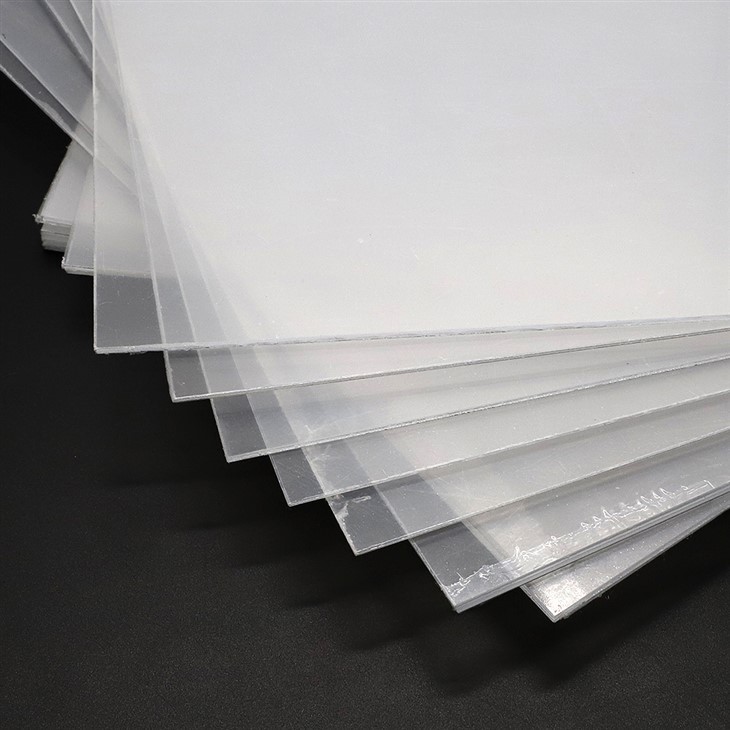
Optical clarity refers to the degree to which a material allows light to pass through without significant scattering or absorption, resulting in a clear, undistorted view of objects seen through it. In the context of transparent PET (Polyethylene Terephthalate) sheets, optical clarity is a crucial property that determines their suitability for various applications.
1. Definition and Measurement of Optical Clarity
- Haze: This is one of the primary methods to measure the optical clarity of transparent PET sheets. Haze is defined as the percentage of light that is scattered when passing through the material. A lower haze value indicates higher optical clarity. For instance, a high - quality transparent PET sheet may have a haze value as low as 1% or even less. The measurement is typically carried out using a hazemeter, a device that shines a beam of light through the sheet and measures the amount of scattered light.
- Transmittance: It measures the percentage of incident light that passes through the PET sheet. High - end transparent PET sheets can have a light transmittance of over 90%. Transmittance is measured using a spectrophotometer, which can analyze the amount of light at different wavelengths that penetrates the material. This is important because in some applications, such as in the display industry, the ability to transmit light accurately across the visible spectrum is essential.
2. Factors Affecting Optical Clarity
Intrinsic Factors
- Polymer Purity: The purity of the PET resin used in the production of the transparent sheet is a critical factor. Impurities in the resin, such as small particles or other contaminants, can scatter light and reduce optical clarity. To achieve high - purity PET, manufacturers often use advanced purification processes during the polymerization of the resin.
- Polymer Structure and Molecular Weight: The regular and uniform molecular structure of PET helps in maintaining good optical clarity. A well - controlled molecular weight distribution ensures that the material has consistent physical properties. If the molecular weight is either too high or too low, it can lead to issues such as uneven crystallization, which in turn affects the transparency of the sheet.
Manufacturing - Related Factors
- Extrusion Process: The extrusion process used to produce the PET sheet plays a significant role in optical clarity. Parameters such as temperature, pressure, and screw speed need to be precisely controlled. If the temperature is too high during extrusion, it can cause thermal degradation of the PET, resulting in yellowing and reduced clarity. On the other hand, if the pressure is not properly maintained, it can lead to the formation of air bubbles or other defects in the sheet.
- Surface Finish: The smoothness of the surface of the PET sheet also affects its optical clarity. A rough surface can scatter light, reducing the overall transparency. Manufacturers use polishing and calendaring processes to achieve a smooth surface finish, minimizing light scattering due to surface irregularities.
3. Importance of Optical Clarity in Different Applications
Packaging Industry
- In the food and beverage packaging sector, high - optical - clarity PET sheets are highly sought after. Consumers prefer to see the product inside the package clearly, as it gives them confidence in the quality and freshness of the contents. For example, for packaging fruits, vegetables, or beverages, a transparent PET sheet with excellent optical clarity can enhance the visual appeal of the product on the shelf. Additionally, clear packaging can also provide information about the product, such as its color, size, and quantity. You can find suitable APET Pet Sheet For Offset Printing for packaging applications where high - quality printing is required along with good transparency.
- In the pharmaceutical packaging industry, optical clarity is crucial for reasons of safety and compliance. Transparent PET sheets allow pharmacists and patients to easily identify the medication inside the package, including its color, shape, and any markings. This helps in preventing medication errors and ensures that the correct dosage is being taken.
Display and Signage
- For display applications, such as point - of - sale (POS) displays and digital signage, optical clarity is essential for presenting sharp and vibrant images. Transparent PET sheets with high clarity can be used as protective covers for displays, allowing the content on the screen to be viewed clearly without any distortion. Similarly, in signage, the ability to transmit light accurately helps in creating eye - catching and easy - to - read signs. Our Plastic PET Sheet is a great option for these display and signage applications.
- In touchscreen displays, PET sheets can be used as a component. The high optical clarity ensures that the touch - sensitive layer below can be operated effectively while providing a clear view of the screen contents.
Photovoltaic Industry
- In the solar panel industry, transparent PET sheets are used as encapsulation materials. Good optical clarity is necessary to allow maximum sunlight to reach the photovoltaic cells, thereby increasing the efficiency of the solar panel. The PET sheet needs to have high transmittance across the solar spectrum to ensure that as much solar energy as possible is converted into electricity. Our PET Transparent Sheet is engineered to meet the high - performance requirements of the photovoltaic industry.
4. Our Product's Optical Clarity Advantage
As a leading supplier of transparent PET sheets, we take great pride in the optical clarity of our products. Our manufacturing process is highly controlled, ensuring that the sheets have extremely low haze values and high light transmittance. We start with high - purity PET resin and use state - of - the - art extrusion and finishing techniques.
- Quality Control: Our in - house quality control team conducts regular inspections and tests to ensure that each batch of transparent PET sheets meets the highest standards of optical clarity. We use advanced measuring equipment, such as hazemeters and spectrophotometers, to accurately measure the haze and transmittance of our products.
- Customization: We understand that different applications may have different requirements for optical clarity. Therefore, we offer customized solutions to meet the specific needs of our customers. Whether it's a packaging application that requires a slightly higher haze for a soft - focus effect or a display application that demands ultra - clear transparency, we can tailor our products accordingly.
5. Contact Us for Procurement
If you are interested in our high - quality transparent PET sheets with excellent optical clarity, we invite you to contact us for procurement discussions. Our team of experts is ready to assist you in selecting the most suitable product for your application. We can provide samples for you to test and evaluate the optical properties of our sheets. Whether you are in the packaging, display, or photovoltaic industry, we have the right solution for you.

References
- ASTM International. (20XX). Standard Test Method for Haze and Luminous Transmittance of Transparent Plastics. ASTM D1003.
- Billmeyer, F. W., & Saltzman, M. (1981). Principles of Color Technology. Wiley - Interscience.
- Osswald, T. A., & Menges, G. (2003). Materials Science of Polymers for Engineers. Hanser Publishers.