


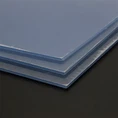


Hey there! As a supplier of Rigid PVC Sheet for Vacuum forming, I've gotten a lot of questions about adjusting the heating time during the vacuum forming process. It's a crucial part of getting that perfect end - product, so I thought I'd share some tips and insights on how to go about it.
The Basics of Vacuum Forming with Rigid PVC Sheets
Before we dive into adjusting the heating time, let's quickly cover what vacuum forming is. Vacuum forming is a manufacturing method where a sheet of plastic (in our case, rigid PVC sheet) is heated until it's pliable. Then, it's stretched over a mold, and a vacuum is applied to suck the plastic tightly against the mold's surface. Once it cools down, it retains the shape of the mold.
Rigid PVC sheets are a popular choice for vacuum forming because they're durable, have good chemical resistance, and can be made in different colors and thicknesses. For example, our Rigid Clear PVC Sheet is great for applications where transparency is needed, like display cases. And the White PVC Sheet For Advertising Board is a top - pick for advertising due to its bright, clean look.
Factors Affecting Heating Time
There are several factors that can influence the heating time for a rigid PVC sheet during vacuum forming.
Sheet Thickness
This is probably the most obvious factor. Thicker sheets take longer to heat up. A thin rigid PVC sheet might only need a couple of minutes in the heating oven, while a thicker one could take 10 minutes or more. If you heat a thick sheet for too short a time, it won't be pliable enough to form properly around the mold. On the other hand, over - heating a thin sheet can cause it to become too soft, sag, or even burn.
Sheet Size
Larger sheets also require more heating time. The heat needs to penetrate the entire surface area of the sheet, so a bigger sheet means more area to heat. You might need to increase the heating time by a few minutes for a significantly larger sheet compared to a smaller one.
Oven Temperature and Efficiency
The temperature of your heating oven plays a huge role. If the oven is set too low, the sheet will take forever to heat up, and if it's set too high, you risk over - heating the sheet. Also, the efficiency of the oven matters. Some ovens heat more evenly than others. An unevenly heating oven might cause parts of the sheet to be over - heated while others are under - heated.


Mold Complexity
A simple, flat mold won't require the sheet to stretch as much during forming, so you might be able to get away with a slightly shorter heating time. However, a more complex mold with deep draws, sharp corners, or detailed features will need the sheet to be more pliable. This usually means a longer heating time so that the sheet can conform to the intricate shape of the mold without tearing or thinning out in some areas.
How to Adjust the Heating Time
Now, let's talk about how you can actually adjust the heating time for your rigid PVC sheets.
Start with Manufacturer's Recommendations
The manufacturer of the rigid PVC sheet usually provides some guidelines on heating time based on the sheet's thickness. These are a great starting point. For example, if you're using our Pvc Sheet Plastic For Advertising Board and the manufacturer says that a 3mm thick sheet should be heated for 5 - 7 minutes at a certain temperature, that's where you should begin your process.
Do Some Testing
Once you've got the manufacturer's recommendation, it's time to do some trial runs. Cut a few small pieces of the same sheet you'll be using for your actual project. Set the oven to the recommended temperature and heat the test pieces for different amounts of time. For instance, if the recommended time is 5 - 7 minutes, you could test 4 minutes, 5 minutes, 6 minutes, and 7 minutes.
After each test piece is heated, quickly transfer it to the mold and apply the vacuum. Observe how well the sheet conforms to the mold. If it's too stiff and doesn't fully cover the mold, it needs more heating time. If it's too soft and starts to tear or sag, it's been over - heated.
Keep Adjusting Based on Results
Based on the results of your test runs, make adjustments to the heating time. If the sheet was too stiff in all the test runs, you can gradually increase the heating time by 30 - 60 seconds for each subsequent test. If it was too soft, reduce the time by the same amount. Keep repeating the testing process until you find the optimal heating time for your specific sheet, oven, and mold combination.
Monitor the Process
During the actual production process, keep an eye on how the sheets are reacting to the heating. If you notice that the first few sheets are coming out with the same issues (either under - formed or over - formed), make a quick adjustment to the heating time. And always be aware of any changes in the environment, like changes in the ambient temperature or humidity, as these can also affect the heating process.
Troubleshooting Common Issues
Sometimes, even after adjusting the heating time, you might run into some problems.
Poor Detail in the Final Product
If the final product lacks detail, it could be because the sheet wasn't heated enough. The plastic might not have been pliable enough to fill in all the small features of the mold. In this case, increase the heating time slightly and do another test run.
Tearing or Thinning of the Sheet
If the sheet is tearing or thinning out in certain areas, it's likely been over - heated. Reduce the heating time and see if that solves the problem. Also, make sure that the mold doesn't have any sharp edges or corners that could be causing the sheet to tear during forming.
Bubbles in the Formed Sheet
Bubbles can form if there's moisture trapped in the sheet or if the sheet has been over - heated and started to decompose. Check the storage conditions of your rigid PVC sheets to make sure they've been kept dry. If over - heating is the cause, reduce the heating time.
Conclusion
Adjusting the heating time for a rigid PVC sheet during vacuum forming is a mix of following basic guidelines, doing some hands - on testing, and making constant adjustments based on the results. It might seem a bit tricky at first, but with a bit of practice, you'll be able to get that perfect formed product every time.
If you're in the market for high - quality rigid PVC sheets for your vacuum forming projects, we're here to help. Whether you need transparent sheets for displays or white sheets for advertising, we've got a wide range of options. Don't hesitate to reach out for a quote or to discuss your specific requirements. Let's work together to make your vacuum forming projects a success!
References
- Plastic Thermoforming Handbook, various industry - specific data on heating times and vacuum forming processes.
- Manufacturer's technical guides for rigid PVC sheets.