


Quality testing plays an important role in PVC sheet manufacturing. For pharmaceutical, food, cosmetic, and industrial packaging, consistent material performance is essential for maintaining product quality and production efficiency.
Before purchasing PVC sheets in bulk, buyers should understand the key quality tests used to evaluate material thickness, transparency, surface condition, mechanical properties, and thermoforming performance.
Here are six important quality inspection methods for packaging-grade PVC sheets.
1. Thickness Measurement
Thickness is one of the most important quality indicators for PVC sheets.
Uneven thickness can affect thermoforming performance, cavity formation, and the consistency of finished packaging.
During inspection, manufacturers typically use precision thickness gauges to measure different points across the sheet.
Key inspection points include:
- Actual sheet thickness
- Thickness tolerance
- Uniformity across the sheet width
- Consistency between production batches
Accurate thickness control helps ensure stable processing and reduces material waste.
Related Product: PVC Sheet
2. Transparency and Optical Inspection
For transparent packaging applications, optical clarity directly affects product visibility and appearance.
PVC sheets should be inspected for:
- Transparency
- Haze or cloudiness
- Yellowing
- Visible impurities
- Surface marks
Optical inspection helps identify defects that may affect the appearance of finished packaging.
For applications requiring clear product visibility, manufacturers should pay particular attention to transparency consistency.
Related Product: Transparent PVC Sheet

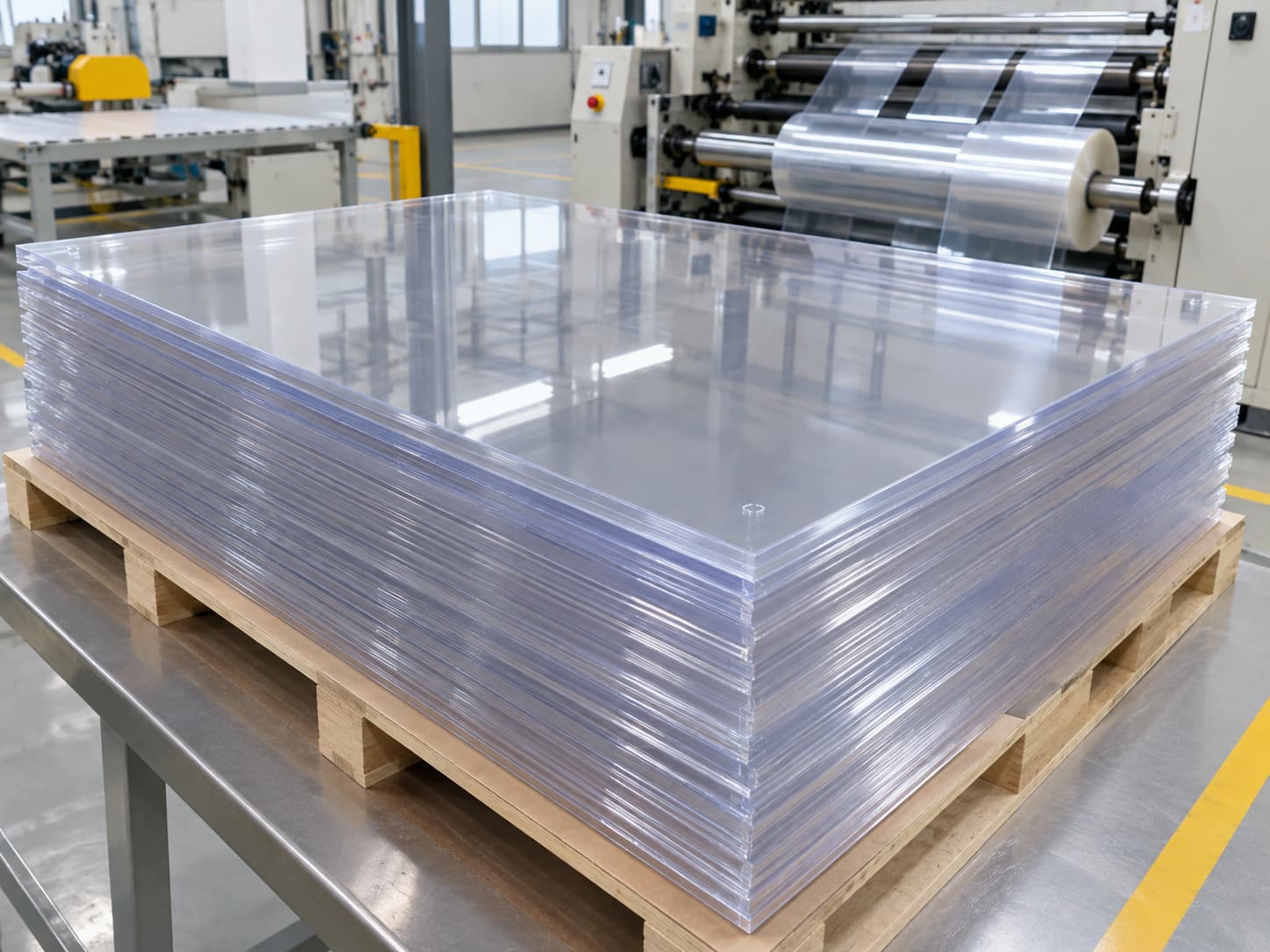
3. Surface Quality Inspection
Surface defects can affect both packaging appearance and subsequent processing.
Common defects include:
- Scratches
- Black spots
- Bubbles
- Dust or foreign particles
- Uneven surface texture
Visual inspection under appropriate lighting helps identify these problems before products are shipped.
Proper handling, clean production conditions, and protective packaging also help maintain surface quality.
4. Mechanical Property Testing
Mechanical properties determine how PVC sheets perform during handling, forming, and packaging applications.
Depending on the intended use, relevant tests may include:
- Tensile strength testing
- Elongation testing
- Impact resistance testing
- Flexibility evaluation
These tests help manufacturers understand the strength and deformation characteristics of the material.
For packaging applications involving transportation or repeated handling, suitable mechanical performance is particularly important.
5. Thermoforming Performance Testing
Thermoforming performance is especially important for PVC sheets used in pharmaceutical blister packaging and other molded packaging products.
During testing, manufacturers evaluate how the material behaves under controlled heating and forming conditions.
Important factors include:
- Heating uniformity
- Forming depth
- Cavity shape consistency
- Wall thickness distribution
- Appearance after forming
Testing under conditions representative of the customer's production process helps determine whether the material is suitable for the intended application.
Related Product: Pharmaceutical PVC Film
6. Thermal Stability Testing
PVC sheets are exposed to heat during processing, making thermal stability an important performance consideration.
Testing can help evaluate:
- Resistance to heat-induced discoloration
- Changes in appearance after heating
- Material stability under specified processing conditions
Good thermal stability helps maintain the appearance and processing performance of PVC sheets during thermoforming.
The appropriate test conditions should be selected according to the material formulation and intended application.
Why Quality Testing Matters for Bulk Orders
For buyers purchasing PVC sheets in large quantities, quality testing is not just a manufacturing procedure. It is an important part of supplier evaluation and supply chain management.
A consistent inspection process helps:
- Reduce defective materials
- Maintain stable production
- Minimize unexpected downtime
- Improve finished packaging quality
- Ensure consistency between shipments
Buyers can also request relevant inspection reports and product specifications before confirming bulk orders.
Conclusion
Quality testing helps ensure that PVC sheets meet the requirements of different packaging applications. From thickness measurement to thermoforming and thermal stability testing, each inspection provides valuable information about material performance.
At Jinfeng New Material, we manufacture PVC sheets, PVC films, PET sheets, and PETG sheets for various packaging applications. With over 20 years of manufacturing experience, we focus on consistent product quality and reliable material solutions.
Contact us today to discuss your packaging requirements or request product samples.