




As a supplier of Matt Rigid Plastic PETG Sheet, I often get asked about the maximum temperature this material can withstand. It's a crucial question, especially for customers who plan to use the sheets in environments where they might be exposed to heat. So, let's dive right in and explore this topic.
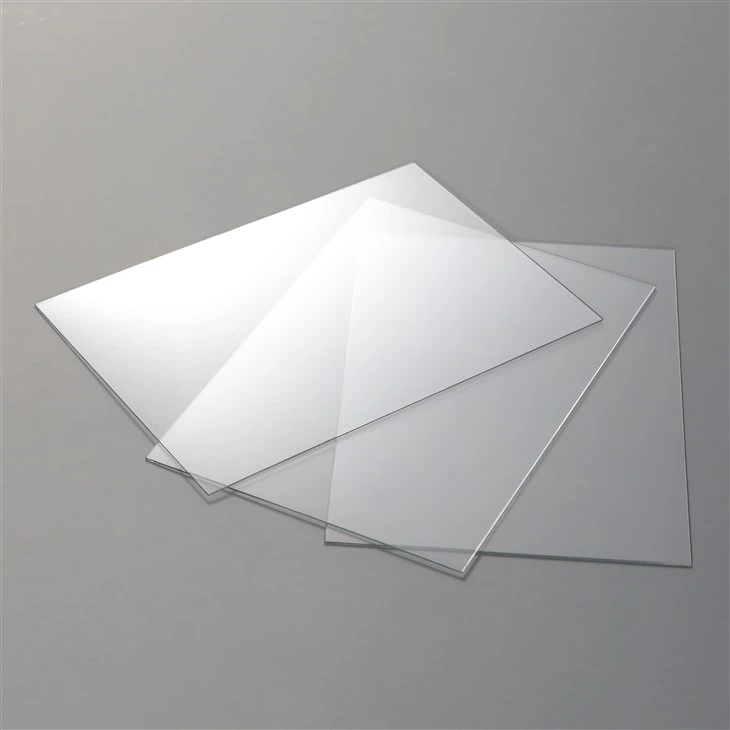
First off, what is PETG? PETG, or polyethylene terephthalate glycol-modified, is a thermoplastic polyester. It's known for its clarity, toughness, and ease of processing. Our Matt Rigid Plastic PETG Sheet, in particular, has a matte finish that gives it a sleek and professional look, making it suitable for a wide range of applications like Matt PETG Plastic Sheet for Binding Covers and Matt Rigid Plastic PETG Sheet for Offset Printing.
Now, let's talk about the maximum temperature. The maximum temperature that Matt Rigid Plastic PETG Sheet can withstand depends on a few factors. Generally, PETG starts to soften at around 85 - 90 degrees Celsius (185 - 194 degrees Fahrenheit). This is its glass transition temperature (Tg), which is the temperature at which the material changes from a hard, glassy state to a more rubbery state.
However, just because it starts to soften doesn't mean it's completely unusable. For short periods of time, our Matt Rigid Plastic PETG Sheet can handle temperatures a bit higher than the glass transition temperature. In fact, it can tolerate temperatures up to about 100 - 105 degrees Celsius (212 - 221 degrees Fahrenheit) for a limited time without significant deformation.
But if you're planning to expose the sheets to high temperatures for extended periods, you'll want to keep the temperature well below the glass transition temperature. For continuous use, I'd recommend keeping the temperature below 60 - 70 degrees Celsius (140 - 158 degrees Fahrenheit). This ensures that the material retains its shape, strength, and other physical properties over time.

Why does temperature matter so much? Well, if the sheet is exposed to temperatures above its tolerance level, it can start to warp, distort, or even melt. This can be a big problem, especially if you're using the sheets for precision applications like printing or binding. For example, in offset printing, any distortion in the sheet can lead to misaligned prints and poor quality output. And in binding covers, warped sheets won't fit properly, making the final product look unprofessional.
Let's take a closer look at some real-world scenarios. Say you're using our Matt Rigid Plastic PETG Sheet for a display in a store. If the display is near a heat source like a radiator or direct sunlight, the temperature around the sheet can rise. If it gets too hot, the sheet might start to warp, and your display won't look as good as it should. On the other hand, if you're using the sheets for indoor applications where the temperature is well-controlled, you don't have to worry as much about temperature-related issues.
Another factor to consider is the thickness of the sheet. Thicker sheets tend to be more resistant to temperature changes compared to thinner ones. This is because they have more mass and can absorb and dissipate heat more effectively. So, if you're expecting high temperatures in your application, you might want to consider using a thicker Matt Rigid Plastic PETG Sheet.
It's also important to note that different formulations of PETG can have slightly different temperature tolerances. Our sheets are made using high-quality raw materials and a carefully controlled manufacturing process to ensure consistent performance. But if you have specific temperature requirements for your project, it's always a good idea to reach out to us. We can provide you with more detailed information and even conduct some tests to see how our sheets will perform under your specific conditions.
Now, let's talk about how to keep the sheets within the safe temperature range. If you're using the sheets in an environment where there's a risk of high temperatures, you can take some precautions. For example, you can use insulation to reduce the amount of heat that reaches the sheets. You can also install ventilation systems to keep the air circulating and prevent heat buildup.
In conclusion, the maximum temperature that our Matt Rigid Plastic PETG Sheet can withstand is around 85 - 90 degrees Celsius (185 - 194 degrees Fahrenheit) for long-term use, and up to 100 - 105 degrees Celsius (212 - 221 degrees Fahrenheit) for short periods. By keeping the temperature within these ranges and taking appropriate precautions, you can ensure that the sheets perform well and last a long time.
If you're interested in using our Matt Rigid Plastic PETG Sheet for your project, whether it's for binding covers, offset printing, or any other application, I encourage you to get in touch. We can discuss your specific requirements, provide samples, and help you find the right solution for your needs.
References
- "Polyethylene Terephthalate Glycol (PETG): Properties and Applications" - Plastics Technology Handbook
- "Thermal Properties of Thermoplastics" - Journal of Polymer Science