




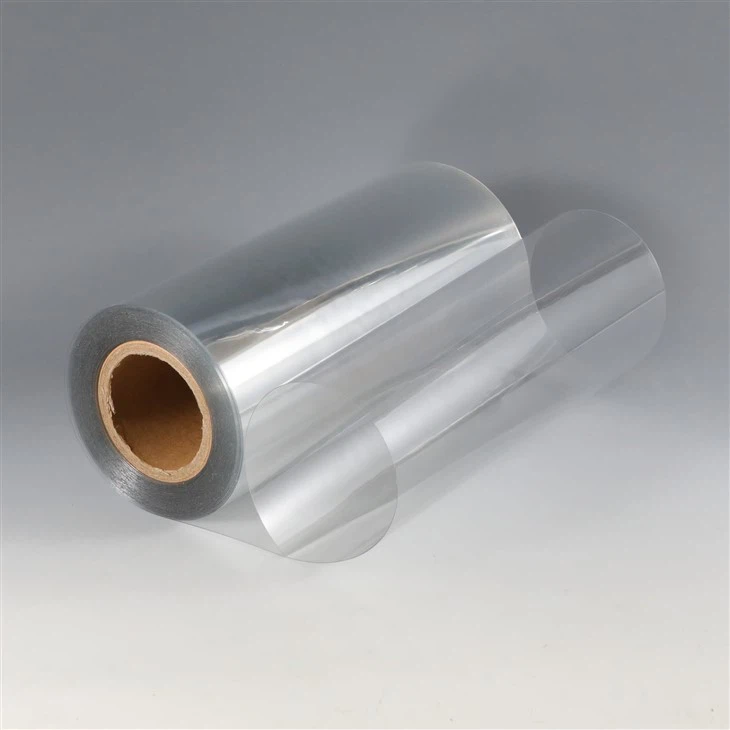
Transparent PET sheets are widely used in various industries due to their excellent properties such as high transparency, good mechanical strength, and chemical resistance. As a supplier of transparent PET sheets, I often receive inquiries about their chemical composition. In this blog post, I will delve into the chemical makeup of transparent PET sheets, explaining what makes them so versatile and useful.
What is PET?
PET, or polyethylene terephthalate, is a thermoplastic polymer resin of the polyester family. It is formed through a chemical reaction between ethylene glycol and terephthalic acid. This reaction is a type of condensation polymerization, where water is produced as a by - product.

The chemical formula of PET is ((C_{10}H_8O_4)_n). The repeating unit in the PET polymer chain consists of a terephthalate group and an ethylene glycol group linked together. The structure of the terephthalate group provides rigidity to the polymer, while the ethylene glycol group adds flexibility and helps in the formation of the long - chain polymer structure.
Chemical Composition Details
Monomers
- Ethylene Glycol: Ethylene glycol ((C_2H_6O_2)) is a colorless, odorless, and slightly viscous liquid. It contains two hydroxyl ((-OH)) groups at each end of the molecule. These hydroxyl groups are reactive and participate in the polymerization reaction with terephthalic acid. During the reaction, the hydroxyl groups of ethylene glycol react with the carboxyl ((-COOH)) groups of terephthalic acid, forming ester linkages ((-COO -)) and releasing water molecules.
- Terephthalic Acid: Terephthalic acid ((C_8H_6O_4)) is a white crystalline solid. It has two carboxyl groups ((-COOH)) located at the para - positions on the benzene ring. The para - orientation of the carboxyl groups is crucial for the formation of a linear polymer chain in PET. When reacting with ethylene glycol, the carboxyl groups lose a hydroxyl group and form ester bonds with the ethylene glycol molecules.
Catalysts and Additives
- Catalysts: In the production of PET, catalysts are used to speed up the polymerization reaction. Antimony trioxide ((Sb_2O_3)) is a commonly used catalyst. It helps in reducing the reaction time and improving the efficiency of the polymerization process. However, due to environmental concerns, other catalysts such as titanium - based catalysts are also being explored as alternatives.
- Additives: Various additives are incorporated into PET to enhance its properties.
- Antioxidants: These are added to prevent the oxidation of the PET polymer during processing and use. Oxidation can lead to degradation of the polymer, resulting in a decrease in mechanical properties and discoloration. Common antioxidants include hindered phenols and phosphites.
- UV Stabilizers: To protect the PET sheet from the harmful effects of ultraviolet (UV) radiation, UV stabilizers are added. UV radiation can cause chain scission in the polymer, leading to a reduction in strength and transparency. Benzotriazole - based and hindered amine light stabilizers (HALS) are often used for this purpose.
- Lubricants: Lubricants are used to improve the flow properties of the PET during processing. They reduce the friction between the polymer and the processing equipment, making it easier to form the PET into sheets. Stearates are commonly used lubricants in PET production.
How Chemical Composition Affects Properties
Transparency
The high transparency of PET sheets is mainly due to the regular and ordered structure of the polymer chains. The linear structure of the PET polymer allows light to pass through with minimal scattering. The absence of large - scale molecular irregularities or impurities in the polymer matrix also contributes to its transparency. The chemical purity of the monomers and the proper control of the polymerization process are essential for achieving high - transparency PET sheets.
Mechanical Strength
The ester linkages formed between ethylene glycol and terephthalic acid provide strong intermolecular forces in the PET polymer. These forces hold the polymer chains together, giving PET sheets good tensile strength and stiffness. The long - chain linear structure of the polymer also allows for efficient load transfer between the chains, enhancing the overall mechanical performance of the sheet.
Chemical Resistance
The chemical structure of PET makes it resistant to many chemicals. The ester linkages in the polymer are relatively stable under normal conditions. PET sheets are resistant to water, weak acids, and bases. However, they can be attacked by strong alkalis at high temperatures, which can cause hydrolysis of the ester bonds.
Applications Related to Chemical Composition
The unique chemical composition of PET sheets makes them suitable for a wide range of applications.
- Packaging: The transparency, mechanical strength, and chemical resistance of PET sheets make them ideal for packaging applications. For example, APET Pet Sheet For Offset Printing is widely used in the packaging of consumer products such as food, cosmetics, and electronics. The high transparency allows consumers to see the product inside the package, while the good mechanical strength protects the product during transportation and storage.
- Thermoforming: Vacuum Thermoforming Pet Rigid Sheet Film For Blister Packing is another important application. The thermoplastic nature of PET, which is a result of its chemical structure, allows it to be heated and formed into various shapes. During thermoforming, the polymer chains can be re - arranged under heat and pressure, making it possible to create complex blister pack designs for pharmaceutical and consumer goods packaging.
- General Plastic Applications: Plastic PET Sheet is used in many other general plastic applications, such as in the production of display panels, protective covers, and signage. The combination of transparency, strength, and chemical resistance makes PET a versatile material for these applications.
Conclusion
In conclusion, the chemical composition of transparent PET sheets, which is based on the combination of ethylene glycol and terephthalic acid monomers, along with catalysts and additives, gives them their unique properties. The regular polymer structure provides transparency, the strong intermolecular forces contribute to mechanical strength, and the stable chemical bonds offer chemical resistance. These properties make PET sheets suitable for a wide range of applications in various industries.
If you are interested in purchasing high - quality transparent PET sheets for your specific application, we would be more than happy to discuss your requirements and offer the best solutions. Please feel free to reach out to us for more information and to start a procurement negotiation.
References
- Billmeyer, F. W. (1984). Textbook of Polymer Science. Wiley - Interscience.
- Oksman, K., Sain, M., & Joseph, K. (Eds.). (2006). Natural Fibers, Biopolymers, and Biocomposites. CRC Press.
- Rosato, D. V., & Rosato, D. V. (2004). Injection Molding Handbook. Kluwer Academic Publishers.