




Hey there! As a supplier of Rigid PETG Sheet for Folding Box, I've been getting a lot of questions about how to improve the heat resistance of these sheets. So, I thought I'd share some insights on this topic.
First, let's talk a bit about Rigid PETG sheets. They're super popular in the folding box industry. You can check out our Rigid PETG Sheet for Folding Box on our website. These sheets are known for their clarity, toughness, and ease of processing. But when it comes to high - temperature environments, they can sometimes face challenges.
One of the key factors affecting the heat resistance of Rigid PETG sheets is the polymer structure. PETG is a copolyester, and its molecular chain arrangement plays a big role. To improve heat resistance, we can look at modifying the polymerization process. By adjusting the ratio of monomers during polymerization, we can create a more ordered and stable molecular structure. This more ordered structure can better withstand the effects of heat. For example, increasing the amount of certain comonomers that have a higher heat - resistant potential can enhance the overall heat - resistant performance of the sheet.
Another approach is the use of additives. There are several types of additives that can boost the heat resistance of Rigid PETG sheets. One common type is heat stabilizers. These stabilizers work by preventing the polymer chains from breaking down under high temperatures. They act as a kind of shield for the molecular structure of the PETG. When incorporated into the sheet during the manufacturing process, heat stabilizers can significantly raise the temperature at which the sheet starts to deform.
Nucleating agents are also useful additives. They accelerate the crystallization process of the PETG. When the sheet has a higher degree of crystallinity, it generally has better heat resistance. The crystals within the polymer matrix provide additional strength and stability, making it more difficult for the sheet to soften or warp when exposed to heat. However, we need to be careful when using nucleating agents. Too much can lead to a decrease in clarity, which might be a problem if the sheet is used for applications where transparency like in PETG Sheet Like Window for Box Packaging is important.
Blending is another strategy. We can blend Rigid PETG with other polymers that have high heat - resistant properties. For instance, blending it with a small amount of polycarbonate can enhance heat resistance. Polycarbonate has excellent heat - resistant capabilities, and when combined with PETG, it can transfer some of its heat - resistant characteristics. But blending also needs to be optimized because different polymers may have poor compatibility, which could affect the overall mechanical and optical properties of the sheet.
The manufacturing process also has a huge impact on heat resistance. During extrusion, the temperature and pressure settings need to be carefully controlled. If the extrusion temperature is too high, it can cause the polymer chains to break or degrade, reducing the heat resistance of the final product. On the other hand, if the temperature is too low, the polymer may not melt and mix properly, leading to an uneven distribution of additives and an inconsistent sheet structure. Similarly, pressure affects the density and orientation of the polymer chains. Higher pressure can result in a more compact and ordered structure, which is beneficial for heat resistance.
When it comes to post - processing, annealing can be a great way to improve heat resistance. Annealing involves heating the sheet to a specific temperature below its melting point and then slowly cooling it. This process relieves internal stresses in the sheet and promotes the formation of a more stable crystal structure. As a result, the sheet becomes more resistant to heat - induced deformation.
Now, why is improving the heat resistance of Rigid PETG sheets so important? Well, in many applications, folding boxes made from these sheets may be exposed to high - temperature environments. For example, in the food industry, boxes may be stored in warm warehouses or transported in hot trucks. If the sheets don't have good heat resistance, the boxes can deform, which not only looks bad but also may compromise the integrity of the product inside.
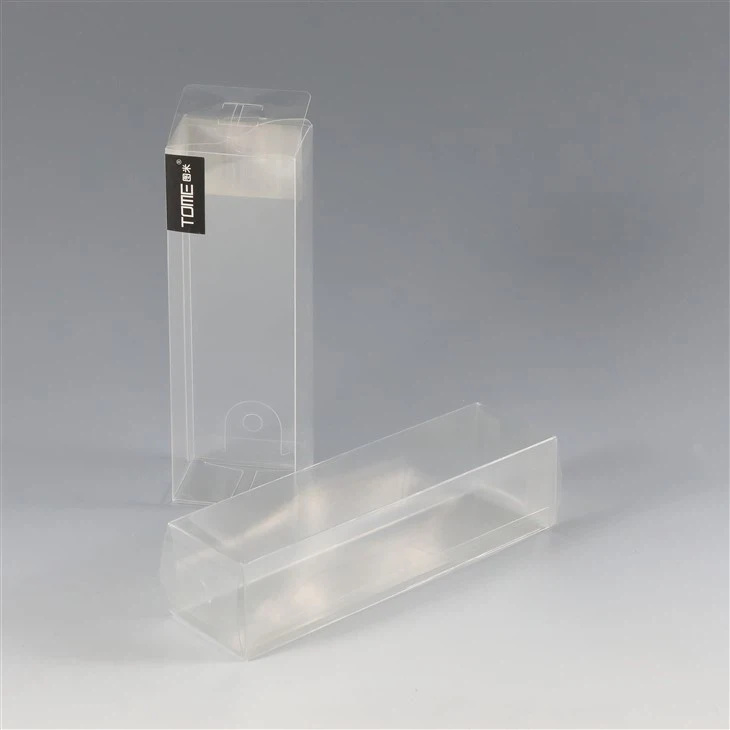

In the printing industry, Rigid PETG sheets are often used. You can check out our Rigid PETG Plastic Sheet for Printing. High - temperature conditions can occur during the printing process itself or when the printed boxes are stored. Improved heat resistance ensures that the printed images remain sharp and the sheets don't warp or curl.
To sum it up, improving the heat resistance of Rigid PETG sheets for folding boxes involves a combination of techniques, including modifying the polymerization process, using additives, blending with other polymers, controlling the manufacturing process, and applying post - processing treatments. By carefully implementing these strategies, we can create sheets that can withstand higher temperatures without sacrificing other important properties like clarity and toughness.
If you're in the market for high - quality Rigid PETG sheets with improved heat resistance for your folding box needs, reach out to us for a chat. We're always here to discuss your specific requirements, share more about our products, and find the best solution for you. Whether you're in the food industry, printing business, or any other sector that uses folding boxes, we've got you covered.
References
- Common Plastics Handbook: A Guide to Properties, Processing, and Applications
- Polymer Engineering and Science Journals on Polyester Modifications
- Industry Reports on Packaging Materials and Their Performance in High - Temperature Environments